Tuesday, January 10, 2017

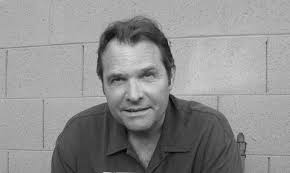
#619 The Other Man- Denis Johnson


#619 The Other Man- Denis Johnson

This is a story about strangers, longing and identity. Characters are making up fake identities for the fun of it; Characters without a place to sleep, or without access to their temporary place to sleep; Newly married characters out looking for love. This is Denis Johnson, so I find in this story, a sad cold look at the human condition…and booze, there is always booze.

Notable Passage: “It was there. It was. The long walk down the hall. The door opening. The beautiful stranger. The torn moon mended. Our fingers touching away the tears. It was there.”

Sunday, January 8, 2017

#618 When Are You Coming Home?- Bryn Chancellor


#618 When Are You Coming Home?- Bryn Chancellor

This is the title selection from Chancellor’s 2015 collection. The book won the Prairie Schooner Prize. 

Robert Cannon is a retired repair shop owner. He and his wife have moved and now he spends his time as a part-time locksmith. It seems like a normal story until we get hints that he is hiding from a tragedy. His son has suffered from an “accident” perhaps dealing with anger issue. He may have closed his shop due to embarrassment or something akin to that.

“That was how he believed he was known, how he wished to be known, how he knew himself. That life was bountiful beyond what he could have ever imagined. But now. Now. Everyone knew a different version. They all knew what he could not say aloud.”

He seems lonely and introspective. He keeps a copy of the keys he makes and “checks in” on the houses he has serviced. A bit creepy? Probably, especially when he actually goes into the houses. But, he is searching for something. He is looking for “Home,” whatever and wherever that is.

“Sometimes he simply drove by, and sometimes he went in, wandering the dark rooms, listening to the creeks in the silence. Nothing nefarious. He had no intentions. He just had an urge to check on things, these homes that did not belong to him.”

#617 Evidence- Alexis Pauline Gumbs


#617 Evidence- Alexis Pauline Gumbs

We are five generations ahead of an era (the twenty-first century) that is referred to as “The time the silence broke.” It is an enlightened era where no punitive actions are necessary and justice is in remembering. This story is evidence of past bravery of those who broke the silence, of those who came out from underground and gave the world power through love.

“You affirm our collective agreement that in the time of accountability, the time past law and order, the story is the storehouse of justice. You remember that justice is no longer punishment. You affirm that the time of crime was an era of refused understanding and stunted evolution. We believe now in the experience on the scale of the intergalactic tribe.”

Future witnesses are writing to the past leaders and writers to thank them for being  brave, and breaking the silence. It’s a bit self-referential as the writer they are quoting is Alexis Pauline Gumbs herself (who also writes a letter to her younger self). Overall, this is a successful story. There is nothing wrong with a utopian look to the future. This story is filled with hope and it’s a call for strength.

Notable Passage: “We have been wrong all along. Blood is not money. Money is not Food.”

Friday, January 6, 2017

#616 The Balcony- Felisberto Hernandez


#616 The Balcony- Felisberto Hernandez

I am utterly taken with the beautiful writing in this collection. Hernandez is just as much a musician as a writer, taking an extraordinary person and building a magical setting around her like a composer builds strings around a piano soloist.

A pianist is invited to visit the home of a father who’s daughter cannot leave her house. She is afraid of going outdoors and has created a world around herself. Her friends are the objects she sees, the colors of parasols she adorns the hallway with, and the balcony she spends most of her time. Her anthropomorphic eye extends to more elusive things like shadows:

“As the light faded we could feel them nestling in the shadows as if they had feathers and were preparing for sleep. She said they develop souls as they came in touch with people.”

Silence is another theme that gets a lot of attentions here. Like the shadows, silence is seen as something alive with not only personality but emotion:

“I could see it growing on the big black top of the piano. The Silence liked to listen to the music, slowly taking it in and thinking it over before venturing an opinion. But once it felt at home it took part in the music. Then it was like a cat with a long black tail slipping in between the notes, leaving them full of intentions.”

-I was sinking into something like the bowels of silence
-the silence was a heavy animal with a paw raised

These are the types of stories that makes reading more than just entertainment. Enough of the stories that try to relate to everyday life. We see everyday life, exist in it, I don’t want to read about it. I read to escape from everyday life, go somewhere only the author can imaging. I’m glad people still write like this, although that’s not entirely fair…nobody writes quite like this.

#615 They’re Not Your Husband- Raymond Carver


#615 They’re Not Your Husband- Raymond Carver

This one should be retitled: How to be an awful husband. Earl is out of work and his wife has to take a job working at an all night diner. One night while visiting her to try to get a free meal, he hears two men make fun of his wife’s looks. Instead of defending his wife or try to make her feel good, he tells her she needs to lose weight.

Amazingly she does what he says and doesn’t seem all that put off by him calling her a “slob.” After starving herself, she does lose weight (as well as the energy to do much more than work and support him), he goes back to the diner hoping to hear some guys say nice things about the way his wife looks.

All this rigmarole at the diner does little but make himself look like a jackass, the  only things he seems to be good at.

Thursday, January 5, 2017

#614 Someone Ought to Tell Her There’s Nowhere to Go- Danielle Evans


#614 Someone Ought to Tell Her There’s Nowhere to Go- Danielle Evans

Georgie went to Iraq for a year. His best friend, Lanae, the woman who finally just became his girlfriend didn’t understand why. She had cut him off to prtoect her daughter. Now he’s back, having been discharged from the army with something akin to Post Traumatic Stress Disorder. He had a bad experience in Iraq involving little girls and it haunts him.

“you didn’t get to pick your ghosts, your ghosts picked you.”

He needs something to give him perspective, something to make his feel safe. He doesn’t get back together with Lanae, but he does start taking care of her daughter, Esther. They get along great and start pretending that he is her Father. This fanstasy starts out harmless but eventually leads to a bit of a scandal. 

Notable Passage: “What’s the difference between you and some other asshole…Either nobody’s responsible for nothing, or every last motherfucker on this planet is going to hell someday.”


#613 Rivers- John Keene


#613 Rivers- John Keene

This is a great idea for a story, and very executed. If written by somebody else about a more modern topic, I suppose this would fall under the genre of “Fan Fiction” but I wouldn’t dare call this that. Seeing as Keene is a professional, maybe it’s “Peer Fiction.”  In any case, this is a story about a famous fictional character, Mr. James Alton Rivers, aka Jim Watson, or the “slave” that was on the raft with Huckleberry Finn.

He is a freed man now, and runs into Huck and Tom Sawyer in the street. They are now in their early 20’s. Tom is a proper southern gentleman and a lawyer, Huck is still a bit of a troublemaker and an adventurer. They start talking about their lives and it becomes clear right off that Tom has no interest in seeing Jim as anything but an inferior person. Jim sees this and decides not to tell him about his life, his travels to Chicago, St. Louis, becoming a shrewd businessman, etc.

The country is on the brink of the civil war and race tensions are high and Tom has certainly taken a side on the matter. Jim is probably smart not to talk about his family escaping north, or the reality of living in the shadow of the Dred Scott case for instance.

“Though I’ve always made sure to have an escape route and a safe house on the other side of the river ready to flee given the trials the courts are putting Mr. Dred and Mrs. Lizzie Scott through.”

Tom and Huck are the ones to bring up the name of Abolitionist heroes:

“Well sounds to me like Jim is keeping himself out of trouble, and the worst thing for anybody these days is getting caught up in all that trouble, getting involved with people like Lovejoy or Torrey or that new agitator writer Mrs. Stowe what likes to stir up a whole heap of trouble too.”

Before parting we see the two youths as something different, and Keene I think writes them as two white archetypes in the struggle for racial equality. This is illustrated by the warnings Tom and Huck each give Jim as they say goodbye. Tom’s warning is straight out “know your place:”

“You’d better watch yourself, Jim, you hear me? Good thing we know you but you walking these streets like they belong to you, and they don’t to no nigger, no matter what some of you might think these days, so you watch it, cause the time’ll come when even the good people like me and Huck here have had enough.”

Huck’s warning is softer, and if not coming from a friend necessarily, it’s at least from a fond acquaintance; one that doesn’t want to see harm come but also doesn’t want to get involved:

“You take care of yourself, Jim, and keep out of all that trouble, please, cause this world is about ready to break wide open, and I sure don’t want to see you swallowed up.”

Overall I think this story is brilliant. The allegory wrapped-up in characters we are acquainted with is a great idea. Keene fills-in a perspective to the Mark Twain story that historians and critics have complained are missing in the original tales. I’m not sure if this story works as well without the original, but  I think it would be great if this story was read side by side in schools (or like I’ve said earlier teaching Henry Dumas side by side with Twain to show two different perspectives on classic Americana).